Scramble Quest Devlog #5: Effective systems
July 18, 2026
Didn’t expect this long of a break between posts! I know several people have read the devlog lately and I’ve been told it’s an enjoyable read. Thank you :). I’ve been asked about ways to subscribe to the blog, and made sure to add a little RSS icon on the sidebar. Click it to subscribe with your favorite RSS feed manager. I also looked into newsletters, but that would be far more involved, so I’ll keep to the RSS feed for now.
So, what has kept me for three weeks? Well, let’s get into it.
Let’s go with Scramble Quest first. Time was short, but interesting. Most of all, I know I can’t make Scramble Quest on my own. And a team has to start somewhere. I put out posts calling for Programmers and Artists who are interested in founding a studio together. Not just for Scramble Quest! I intend on creating a diverse space where marginalized people get a chance to have a voice, where we can grow and learn sustainably. Where the diversity of people that I see in my life, get to see themselves in games.
I’ve found some promising artists that I’m in talks with, but unfortunately I haven’t heard back from enough programmers. The limiting factor is of course that I’m looking for local people, which is a shame, since there’s some fantastic people all over the world with plenty of experience that I’d love to work with. But alas, for now it has to be people in NRW in Germany.
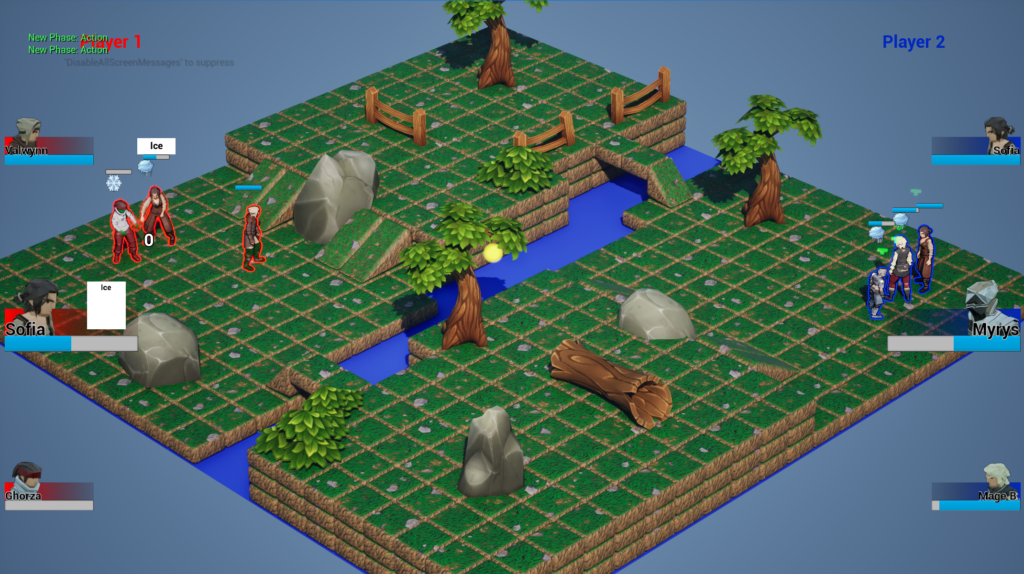
On the prototype itself I finally took a swing at an FX system. The worst aspect of the game right now is that you just don’t get feedback when something happens. There’s no visualization of ability impact, no visual distinction between them, and no information on status effects. I needed an FX system.
But I was really scared of it. Not because it’s particularly hard for me, but rather because I know exactly what I want, and it’s far too big for a prototype! I know I can’t help myself. I know my learnings from across my career and specially from Oddsparks. I had a goal and it was too big. And it was immediately clear my fear was well founded. I started building it not from a logical starting point that you could scale up from, but right in the middle of all of it. I was building systems that wouldn’t have an immediate effect, but rather I was putting them in because I knew I WILL some day need it. They were in because that’s what the system I had envisioned required.
That didn’t do at all and ground things to a halt. I reevaluated, started working on the absolute minimum, most immediate needs (impact VFX) and instead of displaying fancy VFX for the status effects I reduced it to status icons above the units, which had to happen anyway. I’m happy with it.
I also upgraded to Unreal 5.8, which as with every engine upgrade is its own whole endeavour. My favorite feature from this version? Something that was wholly unexpected for me. String tables now have a notes column! We can finally give localizers (and actors) context for each line of text directly in Unreal! Before we only had the string itself and an ID name that you couldn’t edit. This is extremely valuable to ensure localizers know everything they need to accurately translate the rows upon rows of text they get sent.
A big focus this week in particular was game design. I did a small dive into a variety of games with comparable gameplay, to see what I can learn for Scramble Quest. The thing is, Scramble Quest mixes Tactics RPGs, with card games, in a party-game like rhythm. So how do I bring together having units, with stats and very particular forms of aiming, together with the card game, where in my game your hand is always full and accessible to your opponent, and the party game, that doesn’t allow you time to check discard piles and further info beyond what the card says? Luckily almost every game I looked at, if you trace it back long enough, inherits from Dungeons & Dragons and is thus not actually as incompatible as you’d think. It’s fascinating how foundational it is to large parts of our medium.
I frankly was afraid Scramble Quest didn’t allow for much card variety. One issue is that both card and tactics games use different forms of targeting to create different types of abilities, while in my game targeting styles are locked to each character class. Another was that I wanted stats to drive damage calculation, meaning the cards themselves have less influence on that aspect. And I definitely wanted to avoid cards that are just straight up strictly better than others, devaluing part of the collection.
So I grabbed myself a figma board, made post-its for every card idea I had, soon started making post-its for every status effect I could think of, and took notes for all the things that could be possible. Additionally, I started dividing the potential cards into themes, which could become decks, or they could just be in-universe “thematic expansion sets”.
A lot of new questions came up as well. How do I want to include terrain into cards’ effects? Do I want an extra resource to build up and use to encourage different card uses at different times? What determines the damage amount of something like poison (stat, card, or a fixed value)? Can I have cards mess with the card selection phase, instead of focusing only on the combat itself? What are fun ways to interact with applied status effects? Should status effects be able to stack for a stronger effect?
Suffice it to say, there’s so many options now. It’s exciting, but overwhelming.
Outside of Scramble Quest, there was a ton of learning. There was of course MGZSheroes’ insights into management methods and finances, but also “Gründertag” a trade fair for founders with exhibitors, and short talks and panels for founders and from founders about all the things you should watch out for when setting up a new business. I’ve always dreaded the harsh, cruel, opaque world of business, but I really have to commend the moderation and organizers. It was all held in a very friendly welcoming way. The moderator even had a bell he rung every time jargon was used, to make them explain a term to the audience. I think at times we really need that in games. Sure, some talks are aimed at experts, but we need a method for juniors coming in to learn the terms and acronyms we bandy about like it’s obvious.
We also had a little games meetup, learning best practices for handling Gamescom through a “knowledge nugget” shared by Thomas Rössig and Wolfgang Schmitz. It’s far from my first Gamescom (my first was in 2010 a whole… 16 years!? ago. I know, thanks to the photos I took with my first and last digital photo camera!), but still really good advice, specially if you want to meet up with potential publishers and other very busy people, along with some other neat tidbits.
I also had my first mentorship (with Christoph Kohlhaas) and coaching (with Sabine Hahn) sessions. Even with things you think you already know or thought about, there’s more to know, more to think about. I’m really thankful for being able to have this kind of support. I specially appreciated being properly challenged on my convictions, forging them into something solid and resilient that I can be proud of.
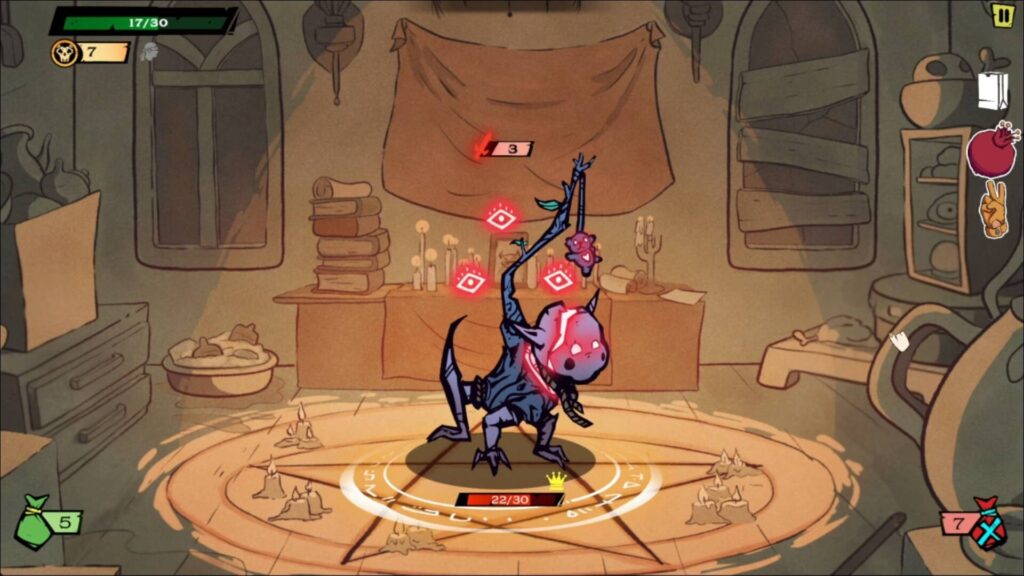
And finally, I got to do a playtest session for Daring Deevs‘ Rootknot, a genuinely fun roguelike, that draws on middle-eastern folktales to create a dark fantasy setting, where you fight by catching objects in the air. It’s at first panic-fueled, but soon you see strategies forming to deal with a variety of combat situations. Loved it. Wishlist it and see if you can get a playtest slot yourself!